
Farmers Branch City Directory Collections
No continuous Farmers Branch-only directory run was located in the official catalog pages. Farmers Branch instead appears within Dallas and Greater Dallas directory systems. The best practice is to search a volume’s name section, place index, street guide, and neighboring-place pages before treating it as coverage for a local address. The table distinguishes the collection, access route, and scope rather than assuming every book is a complete resident list.
| Collection | Years | Where held | Access |
|---|---|---|---|
| TSLAC Dallas directories | 1875–1991 with listed gaps | TSLAC Reference Reading Room | On-site print or film; verify shelf run |
| UNT Dallas City Directories | Multiple decades; item-specific | UNT Portal to Texas History | OCR and page-image search |
| Dallas 1930 directory | 1930, 2,736 pages | UNT / Dallas Public Library digitization | Alphabetical, street, household, classified sections |
| Dallas 1955 directory | 1955, 1,952 pages | UNT / Dallas Public Library digitization | Dallas, Highland Park, University Park introduction |
| Dallas 1961 directory | 1961 | UNT / Dallas Public Library digitization | R.L. Polk volume with Farmers Branch Chamber entry |
| Greater Dallas White Pages | April 1984/1985 example | UNT Portal | Address and telephone leads, not a government roll |
TSLAC staff do not search or transcribe entries by phone or email. Its reading room is the fallback when a needed year has no digital image. Library-licensed city-directory databases may also be available at a library terminal, but current Manske access should be checked with the library.
Farmers Branch City Directories at TSLAC
The Texas State Library and Archives Commission directory guide explains that historical city directories commonly include a name, address, telephone, spouse, occupation, owner or renter mark, and sometimes an employer. These fields are useful leads, but an entry’s date and the volume’s geographic scope are part of the evidence. A directory is not a census substitute or a complete roster of everyone at an address.
TSLAC’s Dallas holdings list begins with 1875 and then lists many individual volumes through 1991, including gaps. The range includes 1878–79, 1880–81, 1881–82, 1883–84, 1884–85, 1886–87, several film volumes, 1919–24, 1950–60, 1961–79, and later 1980s volumes. Check the individual shelf or film format before a visit.
The TSLAC guide is a clear first stop for understanding the collection and on-site rules.
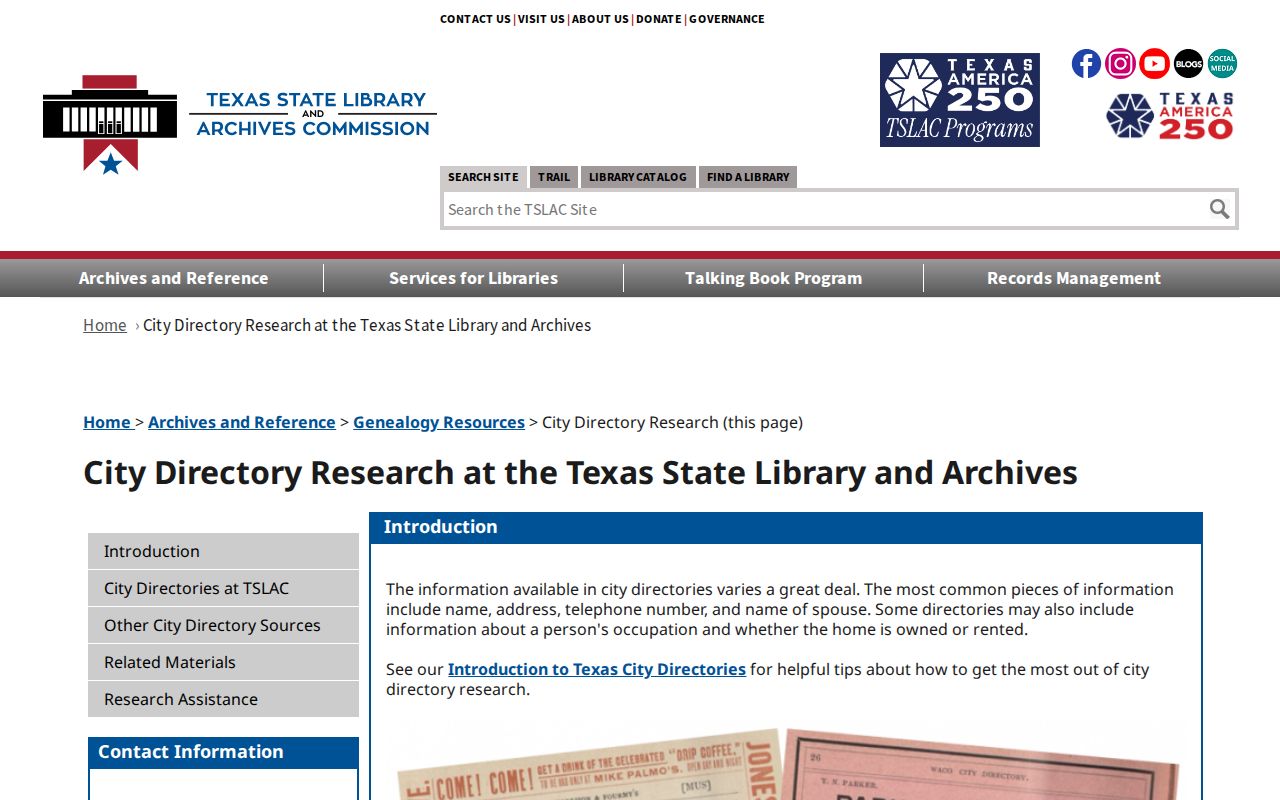
When the online directory shelf stops, the reading room, a library terminal, TSLAC microfilm, and the holding custodian are the documented alternatives.
Farmers Branch City Directory Pages at UNT
The UNT Portal to Texas History collection reports 361 items, 3 types, 2 titles, 22 partners, 18 decades, and 16 counties. Dallas Public Library contributes 105 items. Search within OCR, narrow by title, date, or partner, and inspect the page image. The OCR can misread names and telephone characters, so a result should be checked against the scan.
Digitized Dallas directories show John F. Worley Directory Co. in 1930 and 1955, and R.L. Polk & Co. in 1961. The 1930 book contains alphabetical business and private-citizen material, a street and avenue guide, householders, classified listings, and advertisements. The 1955 introduction identifies Dallas, Highland Park, and University Park coverage. It does not establish universal Farmers Branch inclusion.
The UNT city-directory shelf provides browse, search, page-image, and OCR paths for item-level research.
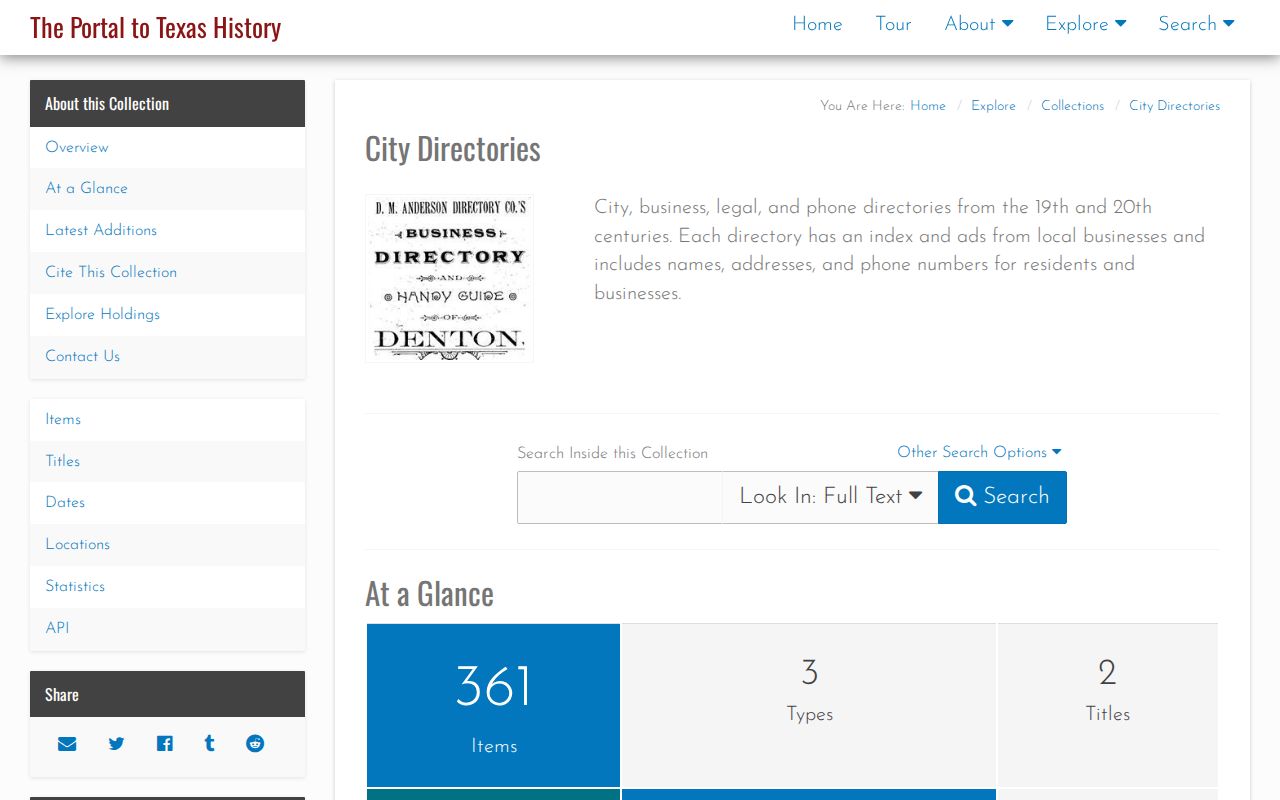
Search a name and then the street guide in the same volume; one type of entry can lead to the other.
Reading a Farmers Branch City Directory Entry
An entry should be read field by field. The 1961 Dallas directory’s Farmers Branch Chamber of Commerce listing is an especially clear local example because it is an organization entry, not a household entry. It gives a visible organization name, City Hall at 13000 William Dodson Parkway, P.O. Box 14232, Farmers Branch, Texas, and telephone exchange Chapel 7-5633. It does not supply a membership list.
| Identity | Name of the person, household head, organization, or business as printed |
|---|---|
| Address | Street address, P.O. box, or a period location label |
| Telephone | Telephone characters and exchange exactly as printed |
| Household clues | Spouse, widow notation, occupation, or owner/renter mark when that volume supplies them |
| Scope | Directory year, publisher, and section that establish what the entry can support |
- Criss-cross directory
- A directory portion arranged by street or address rather than alphabetically.
- Householder index
- An alphabetical list designed to identify the principal listed household name.
- Abbreviation key
- The volume’s explanation for compressed labels; photograph or note it before interpreting marks.
The 1961 page image preserves the period address and exchange, which can matter when searching advertisements, newspapers, and OCR.
Read a page image before relying on OCR, especially when a name or a telephone exchange is the search key.
Farmers Branch City Directory Timeline
The collection provides a Dallas-centered timeline, not a verified sequence of Farmers Branch-only printings. It is still useful for choosing likely volumes and for avoiding a false claim of continuous coverage.
- 1875: the first Dallas directory year listed in the TSLAC holdings.
- 1930: a 2,736-page John F. Worley directory is digitized through UNT.
- 1955: a 1,952-page John F. Worley volume identifies its Dallas, Highland Park, and University Park scope.
- 1961: R.L. Polk’s Dallas directory includes the Farmers Branch Chamber page.
- 1991: the last Dallas year named in the TSLAC list, with gaps across the overall run.
Farmers Branch grew from 915 people in 1950 to 35,991 in 2020. That change helps explain why a rural or small-place reference in one era and a later urban directory reference may use different geographic boundaries. Test the place index in each year rather than extending a later scope backward.
Tracing Farmers Branch City Directory Households
A household trail works best when it records every variation. Keep initials, spelling, spouse name, occupation, address, street suffix, telephone exchange, and any owner or renter mark. Search the alphabetical section first, then turn to the street or avenue guide. A name absent from one section can appear in a business, apartment, institution, or classified listing.
- Choose a name or address and write down all known spellings, initials, spouse names, and street variants.
- Find the first relevant alphabetical listing and capture the directory year, page, address, and every printed field.
- Use the same volume’s street guide or criss-cross section to check the address context.
- Compare nearby directory years rather than assuming an annual, complete sequence.
- Pair the directory year with the released federal census, then confirm with deed, probate, obituary, newspaper, church, school, or cemetery material.
Federal schedules from 1850 through 1950 are generally public under the 72-year rule. A directory supplies intervening evidence, but it does not replace the census. A disappearance can mean a move, a skipped volume, changed scope, rural address, or OCR error. It does not by itself establish death or a family relationship.
Farmers Branch City Directory Companions
The Carrollton–Farmers Branch TXGenWeb index points to cemeteries, churches, maps and aerials, old homes, biographies and obituaries, scanned phone books, schools and yearbooks, census, land grants, and societies. It is a finding aid rather than a government custodian, so use its leads to locate original scans or official records.
Elm Fork Echoes, the journal of the Peters Colony Historical Society, has a digitized run from about 1989 onward and an index to volumes 1–17. Its topics include early settlers, descendants, the Farmers Branch Baptist Church bell, Rock House, Peters Colony markers, and local institutions. The city’s Historical Park offers another place anchor for older names and newspapers.
The local-history index surface is visible at Carrollton–Farmers Branch TXGenWeb.
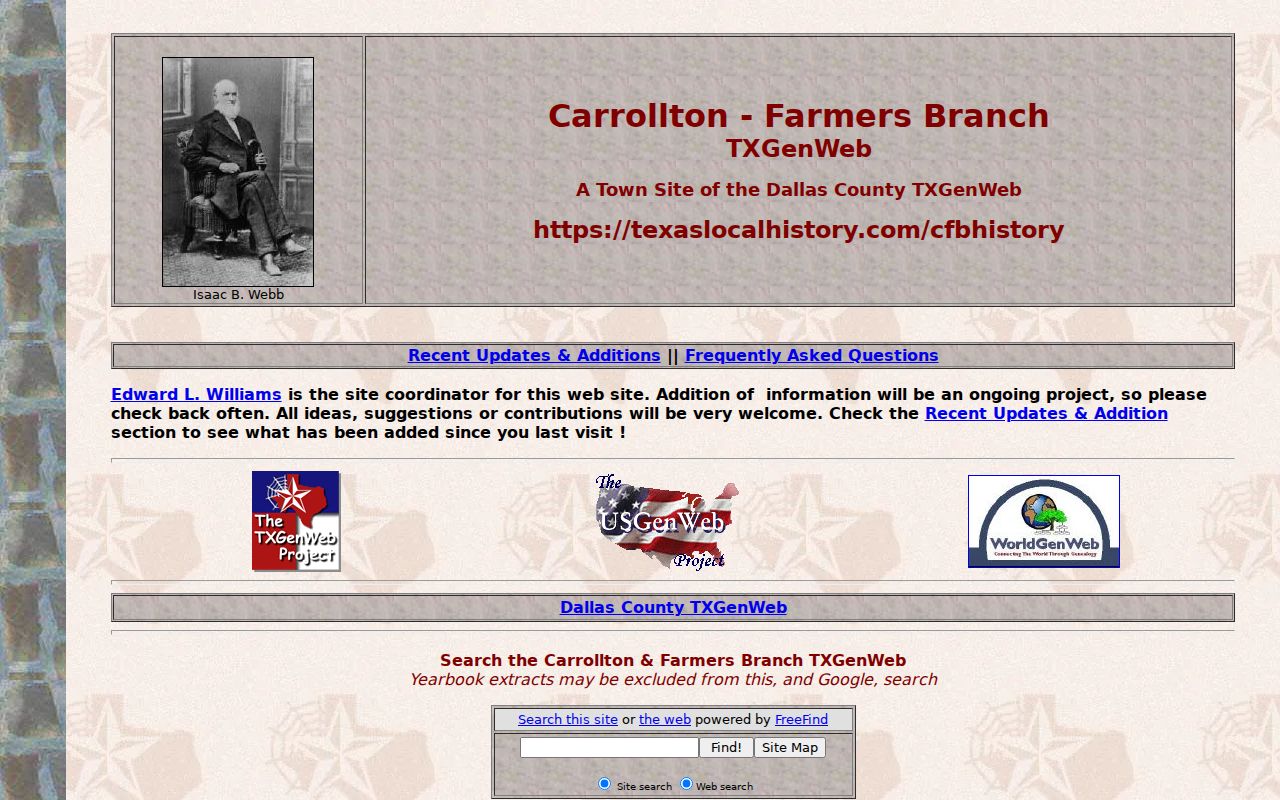
Use a journal or local-history lead alongside a dated directory entry, not as a substitute for the original record behind a claim.
Farmers Branch City Directory Cemetery Leads
Keenan Cemetery is a municipal place anchor under Historical Park, but the city page did not expose an interment search, plot map, name field, or burial-register coverage. For an apparent death or family connection, request cemetery information through Parks, Historical Park, or the city Public Information Request Portal rather than assuming a missing web result means no record exists.
The official cemetery page is a starting point for a custodian request and for connecting a directory address to a local-history search.
Pair a burial clue with probate, obituary, deed, directory, or church evidence and preserve the date of each source.
Farmers Branch City Directory Research at Manske
Manske Library is the local question-and-fallback point when a directory volume is not online. Its public pages advertise a catalog, books and eBooks, digital newspapers and magazines, Access World News, Interlibrary Loan, online databases, and research tools. Library-card categories include Farmers Branch residents, Carrollton residents, TexShare, nonresident, Innovation Zone, and lost-card categories. Availability of a licensed database can change, so confirm access before planning a directory search.
The accessible library pages did not list exact Farmers Branch city-directory, reverse-directory, obituary-index, funeral-home-book, or newspaper-microfilm holdings. Ask the reference desk for the local-history shelf inventory, Dallas and Greater Dallas Polk runs, Farmers Branch Times Chronicle and Metrocrest News holdings, yearbooks, obituary indexes, and licensed Ancestry or HeritageQuest access. That question is narrower and more useful than asking for every record about a family or address.
Interlibrary Loan, a library terminal, TSLAC’s reading room, digitized UNT pages, and a records custodian are separate access channels. A librarian can identify a holding or database path, while a government custodian remains the source for a certified public record.
Farmers Branch City Directory Place Names
Older Farmers Branch material may use community, church, railroad, or Peters Colony geography rather than today’s city labels. The first Peters Colony office dates to 1845, Webb’s Chapel to May 5, 1845, and the home-rule charter to 1956. The 1915 Dallas directory describes Farmers Branch as a location near MKT stations. Search railroad, station, corridor, and old community terms as well as the modern city name.
Dallas County courthouse fires also make record survival a question rather than an assumption. The city-directory shelf, TSLAC microfilm, FamilySearch county books, newspapers, and original custodians form layered access channels. For modern address-keyed evidence after a historical directory lead, use the Farmers Branch street directory route through DCAD, GIS, and the Official Records index.
Note: An old listing is strongest when its page, year, place scope, and supporting record are kept together.