
Farmers Branch Previous Residents by Era
Different record sets hold different portions of a house story. Online coverage at the Dallas County Official Records portal has no verified earliest year in the research, so its certification date should never be mistaken for a complete back-file statement. Directory runs are also Dallas or Greater Dallas collections with gaps and changing geographic scope. Start with the most recent reliable record, then move to the source that covers the next earlier period.
| Source | Years It Covers | Where Held | What It Shows |
|---|---|---|---|
| Dallas County Official Records | Current online span not located | Dallas County search portal | Grantors, grantees, instruments, dates, and legal-description leads |
| Dallas deed indexes | 1846–1970 | FamilySearch catalog | Direct and indirect deed index trail |
| Dallas deed books | 1846–1901 | FamilySearch catalog | Earlier recorded deeds and property evidence |
| Dallas city directories | 1875–1991 with listed gaps | TSLAC Reference Reading Room | Household, street-guide, phone, and occupation leads |
| UNT digitized directories | Multiple decades; scope varies | UNT Portal to Texas History | Searchable OCR and page images |
| Federal census | Public schedules through 1950 | NARA and library databases | Household evidence near directory years |
| City permit evidence | Sample record from 2007; full run not located | Farmers Branch city systems or request route | Project address, dates, parties, and property identifiers |
For a recent ownership change, start with the appraisal account and recorded deed. For a mid-century household question, pair a directory year with census, newspaper, or obituary evidence. For an early land question, move through FamilySearch, TSLAC microfilm, and the custodian rather than relying on a modern street name.
Start at the Farmers Branch Parcel
The backward trail starts with DCAD, not with a name from an old phone book. Search the current property by address, owner, business name, or 17-character account number. Capture the account, situs address, owner name, mailing address, legal description, subdivision, block, lot or tract, and any other identifying text. The legal description matters because it survives many changes that can make a historic street search fail.
DCAD does not assign property addresses. The city assigns an address, while the appraisal district can update a mailing address. Compare those labels exactly. A mailing address may identify an owner, agent, PO box, another property, or former address. It should not be treated as proof that a person physically lived at the parcel. The city GIS Site Address Points and Tax Parcels layers help confirm the physical location before a deed or directory search begins.
Continuity key. Address → DCAD account → legal description → recorded instrument → prior owner. Use the legal description when street spelling, postal city, or numbering becomes uncertain.
Dallas Deeds and Past Owners
Dallas County Official Records supports searches for grantor or grantee, subdivision, document type, document number, and recorded-date range. It also offers index-only and OCR or full-text scopes. Index-only treats multiple words individually, while OCR searches document contents as a phrase and can be noisy. Use a deed, special warranty deed, warranty deed, deed of trust, lien, release, or plat only after recording the document number and recorded date.
- Find the present owner and legal description on the DCAD card.
- Search that owner as grantee in Dallas County Official Records. Use the legal description, subdivision, document type, or date as a second key.
- Open the available index or image and note the grantor, grantee, instrument number, recording date, legal description, and prior seller.
- Search the seller as the next grantee to locate the earlier acquisition. Repeat with initials, married names, trusts, corporate names, and estate representatives as needed.
- When the online trail ends, use the office, copy-request form, FamilySearch deed indexes, TSLAC microfilm, or an in-person custodian route for the earlier period.
- Grantor
- The party conveying or transferring an interest in a recorded document.
- Grantee
- The party receiving that interest. Searching a prior seller as grantee can reveal the earlier purchase.
- Chain of title
- The sequence of ownership-related instruments tracked backward through time.
- Legal description
- The lot, block, tract, subdivision, acreage, frontage, or metes-and-bounds text that identifies land more reliably than a street label.
Dallas County's Official Records search is the online starting point for the grantor-grantee phase of Farmers Branch previous residents research.
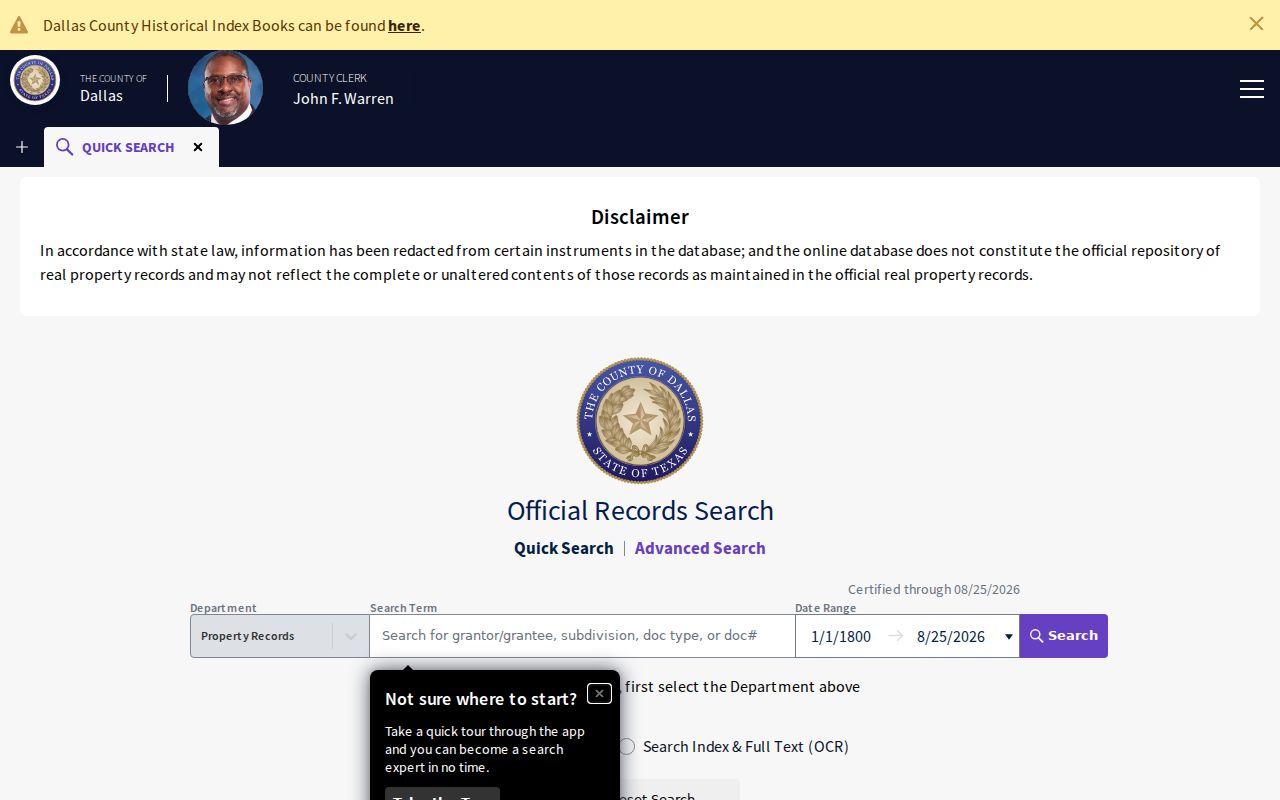
The interface shows the department, search-term, date-range, quick-range, and index or OCR choices that should be saved with the result, not guessed from a name alone.
Farmers Branch Deed Access Gaps
The portal's displayed certification through August 25, 2026 is a current status notice. It is not an official statement of the earliest online index year or complete historical coverage. That distinction changes the next step when the property has a long history. A no-result can mean the desired deed precedes online imaging, uses a variant name, has a different legal description, or lies in another record series.
The Dallas County Clerk Recording Division is at 500 Elm Street, Suite 2100, Dallas, with weekday hours of 8:00 to 4:30 and phone 214-653-7099. The research documents plain copies at $1 per page per document and certified copies at $1 per page plus $5 certification per document through the request route. E-Certify is available for digitally available documents; other documents require a certified-copy request or office visit. For older leads, FamilySearch catalogs Dallas deed books from 1846 to 1901 and deed indexes from 1846 to 1970, subject to account or affiliate restrictions.
Farmers Branch Directories Between Censuses
Deeds show owners, but previous residents often require household sources. Dallas directories can contain name, address, telephone, spouse, occupation, owner or renter notation, and sometimes more. Search both the alphabetical section and the street or avenue guide. A person absent from one section may occur in an organization, business, apartment, institution, or classified entry. The collection details belong in the Farmers Branch city directory; the address trail uses the specific volume and page as dated evidence.
Pair nearby directory years instead of assuming every year is present. TSLAC lists Dallas volumes from 1875 through 1991 with gaps. UNT's digitized collection is searchable, but OCR may misread a name and a Dallas directory is not proof that every Farmers Branch household was included. Compare a directory address with the closest federal census. Census schedules from 1850 through 1950 are generally public under the 72-year rule, and the released 1950 schedule is the latest federal census available in the research.
- Record all spellings, initials, spouses, occupations, street suffixes, telephone exchanges, and page numbers from the directory entry.
- Search the same volume's street guide for the address, then check an adjacent year or a nearby available year.
- Match the household to the nearest census schedule without treating a directory as a census substitute.
- Test the result against a deed, obituary, probate filing, newspaper notice, school source, or church record before stating who lived there.
UNT's 1961 Farmers Branch Chamber listing is an example of a dated local reference within a Dallas directory.
The inspected page identifies the Farmers Branch Chamber of Commerce, not a household roster. It supports a year, place, address, and historic telephone-format lead, while the street and name sections must be checked for individual residents.
Farmers Branch House-History Leads
Local sources can explain a gap in the formal record trail. The Carrollton–Farmers Branch TXGenWeb index points to cemeteries, churches, maps and aerials, old homes, biographies and obituaries, scanned phone books, schools and yearbooks, census, land grants, and societies. It is a finding aid rather than a government custodian. Verify each scan or claim against the original repository, record image, or official office.
The Carrollton–Farmers Branch local-history index gathers several categories that can support a Farmers Branch previous residents search after a deed or directory lead is established.
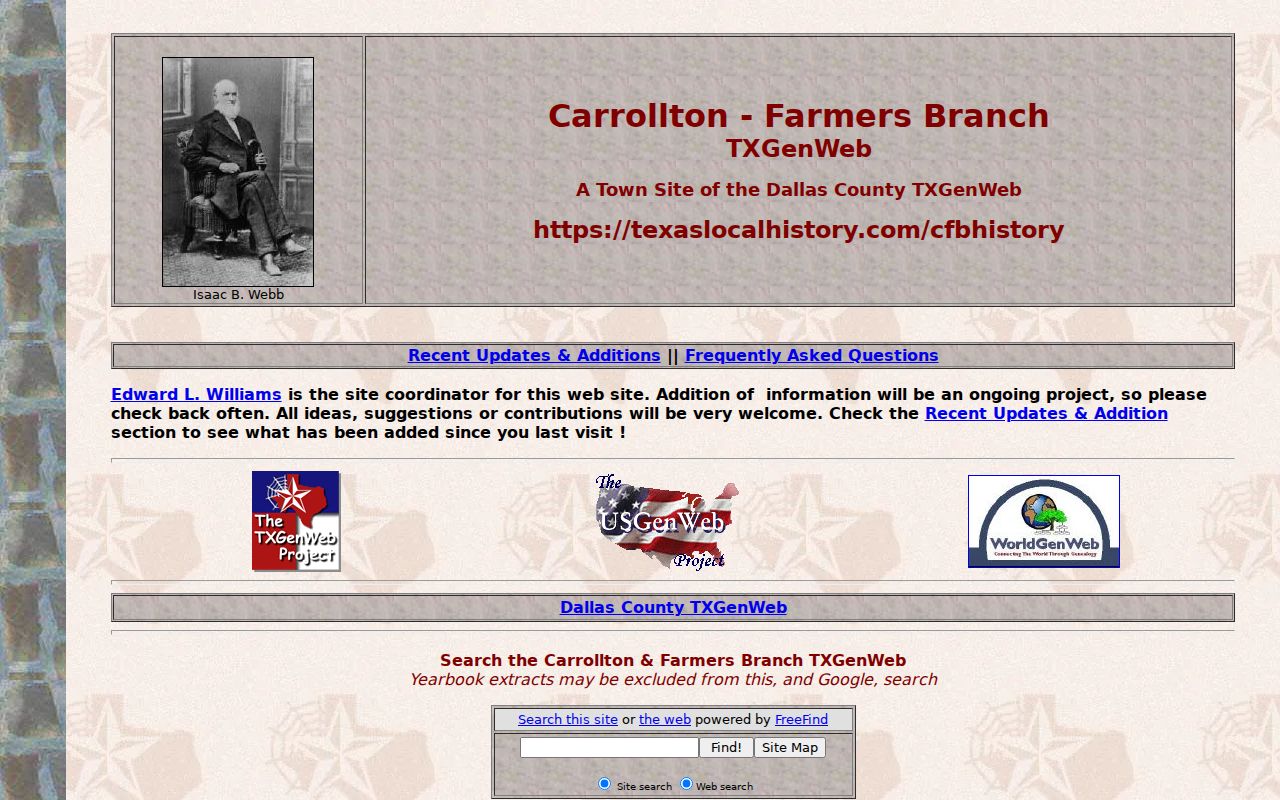
Its value is in pointing research toward an original cemetery, newspaper, map, yearbook, or land source rather than combining those clues into an unsupported identity claim.
TSLAC's city-directory guide explains that its Reference Reading Room collection is on-site and staff do not search or transcribe entries by phone or email. Library-licensed directory databases may also be available at a library terminal, and Manske Library can be asked about local reference holdings, newspaper access, reverse directories, yearbooks, and microfilm.
TSLAC's city-directory research guide describes the fields and on-site access limits relevant to a prior-address search.
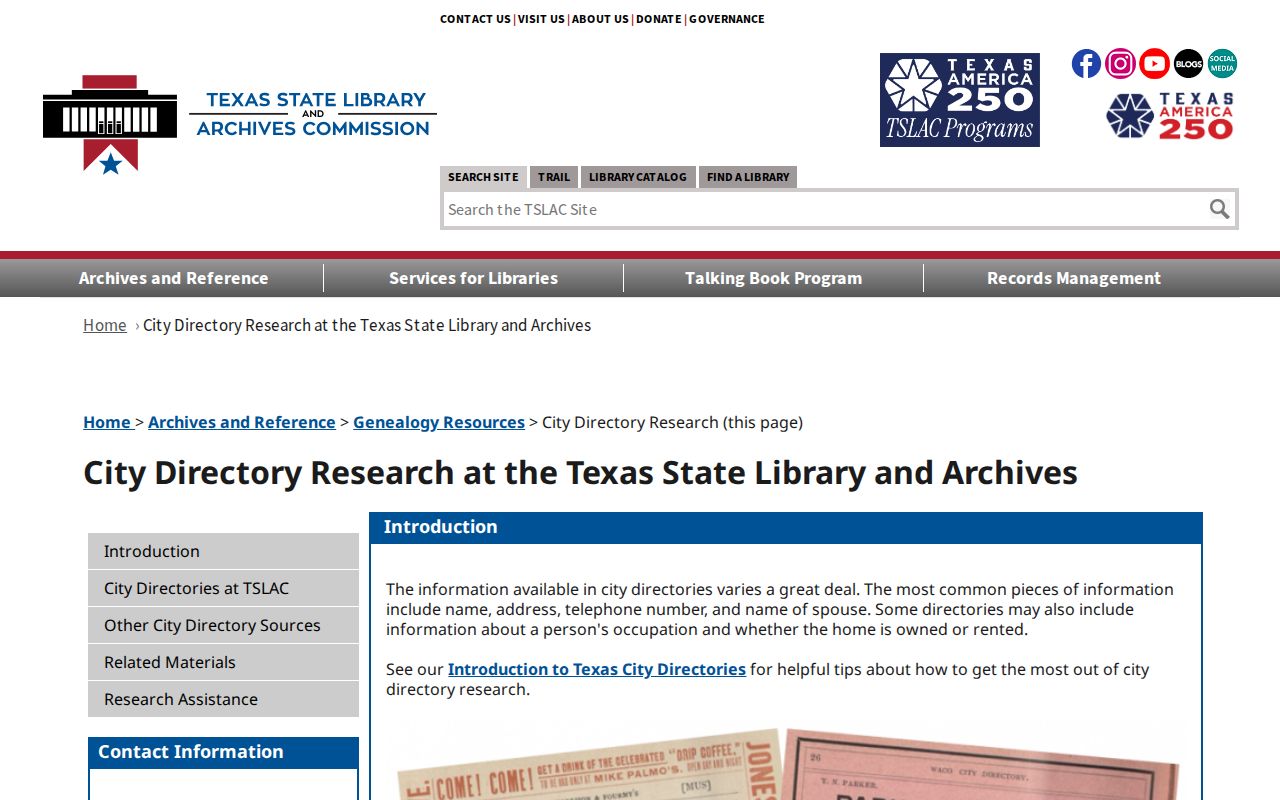
The guide helps distinguish an available directory collection from a confirmed entry for a particular Farmers Branch household.
Past Residents at Trail Endpoints
Obituaries, probate files, marriage and death indexes, cemetery information, newspapers, and church records can close or extend a previous-resident trail. An obituary may name relatives but needs date and publication checks. Probate can identify an executor, filings, notices, and legal description, but sensitive or sealed material remains restricted. A Texas vital index is an event lead, while current certified copies have relationship and access rules.
Farmers Branch's official Keenan Cemetery page is a municipal place anchor, although an interment database and burial-register years were not exposed in the research. Ask Parks, Historical Park, or the city public-information route for a specific cemetery record. Local titles identified by TSHA include the Farmers Branch Times Chronicle, published since 1956, and Metrocrest News, published since 1960. Ask Manske reference staff about newspaper databases, microfilm, and obituary indexing rather than assuming a continuous online archive.
Farmers Branch Records Before Modern Addresses
Farmers Branch history explains why an old house trail may leave the modern city label. The first Peters Colony office dates to 1845, Webb's Chapel was formally organized in 1845, and the community appears in railroad and rural-place references before the 1956 home-rule charter. An 1840s church reference or a 1915 directory line will not necessarily use a current street, ZIP, or city format.
Dallas County was created in 1846, and courthouse fires affected early records. Treat that history as a reason to confirm that a specific record survived, not a reason to assume every book is missing. A current parcel trail may need Dallas County, FamilySearch, TSLAC, UNT, and historical-society sources because digitization has happened in layers. Preserve the original community name, station reference, legal description, and place index when a modern address fails.
Lawful Farmers Branch House History
Previous residents research is most useful for house history, family history, estate questions, archival work, and personal curiosity. It should not turn a historic address into a way to monitor a living person. Old directories, mailing addresses, and partial public records can be stale, incomplete, or associated with another person of the same name.
Respect the record boundary. Do not use Farmers Branch previous residents sources to stalk, harass, threaten, or harm anyone. For a living person, rely on a lawful, current, source-specific record and respect protected, sealed, and confidential information.
When a point remains uncertain, describe it as a lead and ask the record custodian or archive for the underlying document. That discipline keeps the address timeline honest and leaves room for corrections when new evidence appears.